

The Blink Code: Cracking Eyelid Signals for Epilepsy Insights
Genetic generalized epilepsies (GGE) affect about 20 million people worldwide and account for a quarter of all epilepsies. Yet diagnosis is not always straightforward, up to a third of adults continue to have seizures despite treatment, and many face psychiatric and cognitive comorbidities such as impulsivity and depression. Simple, low-cost markers to guide diagnosis and anticipate these risks are still lacking.
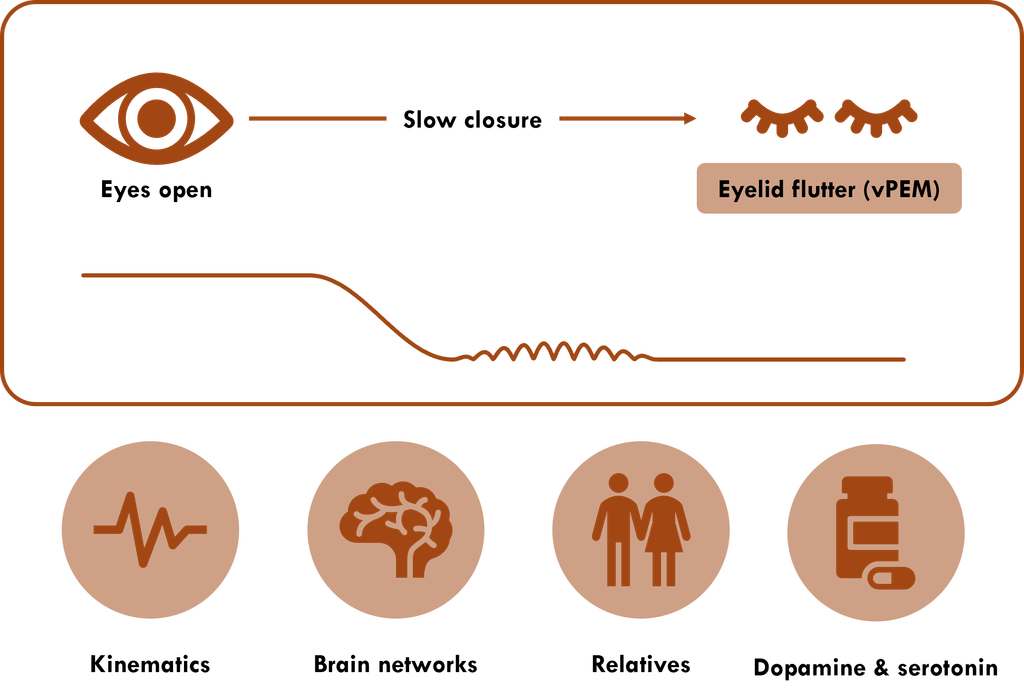
BEACON starts from a clinical observation. When asked to close their eyes slowly, many people with GGE show a brief, rhythmic eyelid flutter, called vPEM. We will measure this sign with optoelectronic motion analysis and combine it with high-density EEG, multimodal MRI, dopamine and serotonin transporter imaging, and genetics, in patients, their first-degree relatives and controls. A pilot pharmacological study will test whether modulating these neurotransmitter systems affects impulsivity, mood and vPEM features.
Aim: establish vPEM as a quantifiable clinical biomarker of GGE, clarify its brain mechanisms, and translate it into portable software that helps clinicians diagnose earlier and identify patients at risk of psychiatric complications.
- Funded by the Italian Ministry of University and Research (MUR), Fondo Italiano per la Scienza (FIS 3), Consolidator Grant
- Duration: 2026–2031
- Principal Investigator: Prof. Anna Elisabetta Vaudano