

Late-Onset Epilepsy: Comprehensive Phenotypic Characterization through Neuropsychological Profiling, Plasma Biomarkers, and Advanced Brain Imaging for Understanding Cognitive Trajectories
Patients with late-onset epilepsy (LOE) face a significantly elevated risk of cognitive decline and dementia, with epileptic seizures often emerging in the early stages of Alzheimer’s disease (AD). However, the causal link and pathological mechanisms connecting late-onset temporal lobe epilepsy of unknown origin (LO-TLE) and cognitive impairment remain poorly understood.
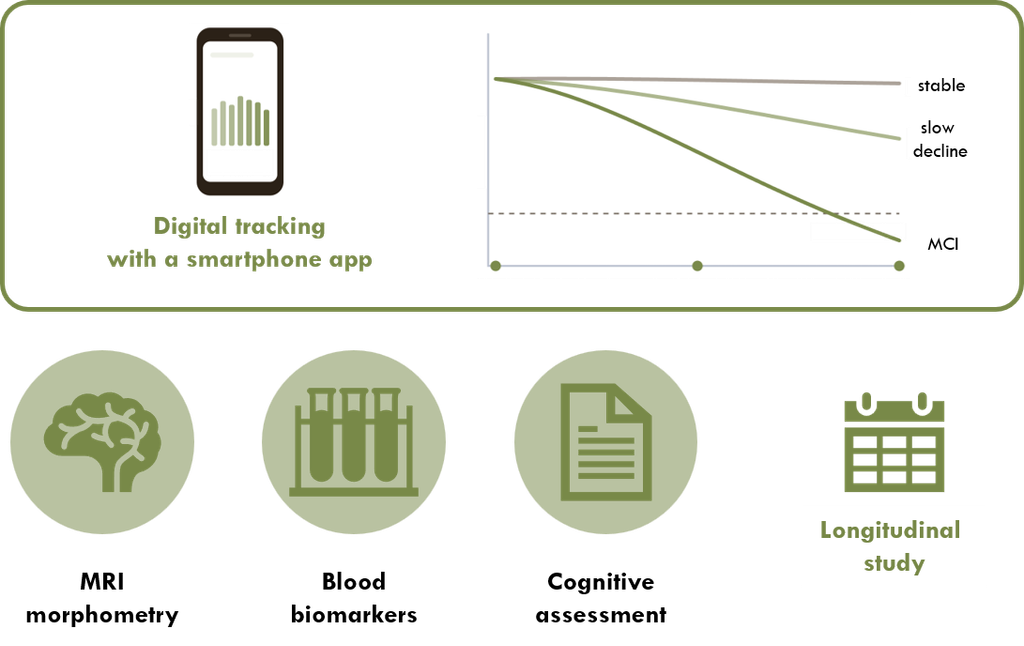
PREDICT is a prospective and retrospective, multicenter, longitudinal translational study designed to characterize patients with LO-TLE to identify predictors of cognitive decline and conversion to mild cognitive impairment (MCI) or dementia. The project integrates comprehensive formal neuropsychological assessments with continuous digital cognitive tracking via a dedicated smartphone app, ultra-sensitive plasma biomarker profiling (Aβ42/40 ratio, p-tau217, NfL, and GFAP), and advanced high-resolution 3T brain MRI morphometry (cortical thickness, subcortical volumes, and amygdala/hippocampal subfields) tracked over a 2-year follow-up period.
Aim: track cognitive trajectories in LO-TLE, validate non-invasive plasma biomarkers and structural MRI metrics, and develop tools for early stratification of dementia risk to guide personalized clinical strategies.
- Funded by Ministero della Salute – Bando Ricerca Finalizzata 2024
- Duration: 2025–2028
- Principal Investigator: Cinzia Costa (Umbria)
- Partners:
- UO1: University of Perugia, Department of Neurology (Cinzia Costa);
- UO2: AOU Modena, Neurophysiology Unit and Epilepsy Center (Anna Elisabetta Vaudano);
- UO3: Fondazione IRCCS San Gerardo dei Tintori, Monza, Epilepsy Center (Jacopo Cosimo Di Francesco)