

Phenotypic Characterization of Late-onset temporal lobe epilepsy through serum biomarkers and advanced brain imaging: from hUman to animal modEl
Epilepsy is the third most common neurological disorder in older adults, and in over 20% of late-onset cases no cause can be identified. Most of these unexplained forms arise from the temporal lobe (LO-TLE). Although seizures are usually well controlled, growing evidence links LO-TLE to neurodegeneration: affected individuals face a two- to three-fold higher risk of developing mild cognitive impairment or Alzheimer’s disease.
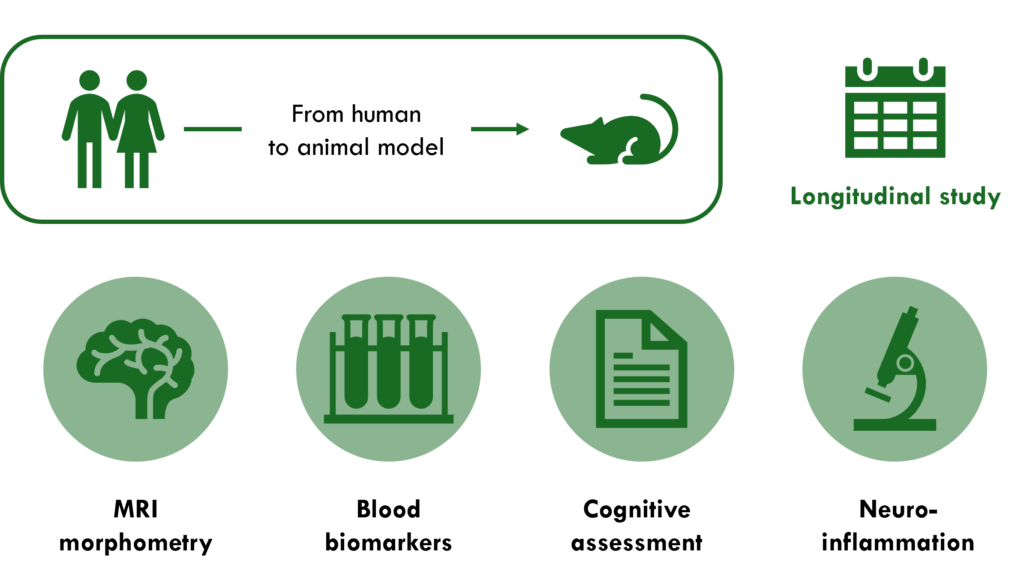
CLUE is a multicenter, translational, and longitudinal study designed to understand this link. We combine advanced MRI morphometry, blood biomarkers of neurodegeneration (Aβ, tau, NfL), inflammatory profiling and neuropsychological assessment in patients and age-matched healthy controls, followed over time. In parallel, a rodent model of late-onset epilepsy and ex vivo brain preparations allow us to test the mechanisms observed in patients.
Aim: identify distinct LO-TLE phenotypes and provide clinicians with tools to recognize, early on, the patients most at risk of cognitive decline.
- Funded by Fondazione LICE (€40,000)
- Duration: 2024–2026
- Principal Investigator: Anna Elisabetta Vaudano
- Partners:
- AOU Modena (Clinical Neurophysiology / Epilepsy Monitoring Unit);
- University of Modena and Reggio Emilia (Giulia Curia);
- University of Perugia (Cinzia Costa);
- IRCCS San Gerardo dei Tintori, Monza (Jacopo C. DiFrancesco);
- IRCCS Istituto Neurologico Carlo Besta, Milan (Laura Librizzi)
Related publications: