

Neuro-vascular coupling patteRns during wakEFulness and sleep In genetic generalized epilepsies: a Novel endophenotyping approach for genotype-phEnotype correlation
Genetic generalized epilepsies (GGE) account for about a quarter of all epilepsies. Although most patients respond well to treatment, 12–36% never become seizure-free, and routine clinical features are not enough to predict who will. The syndromes often overlap, and the path from genetic background to clinical picture remains largely unclear.
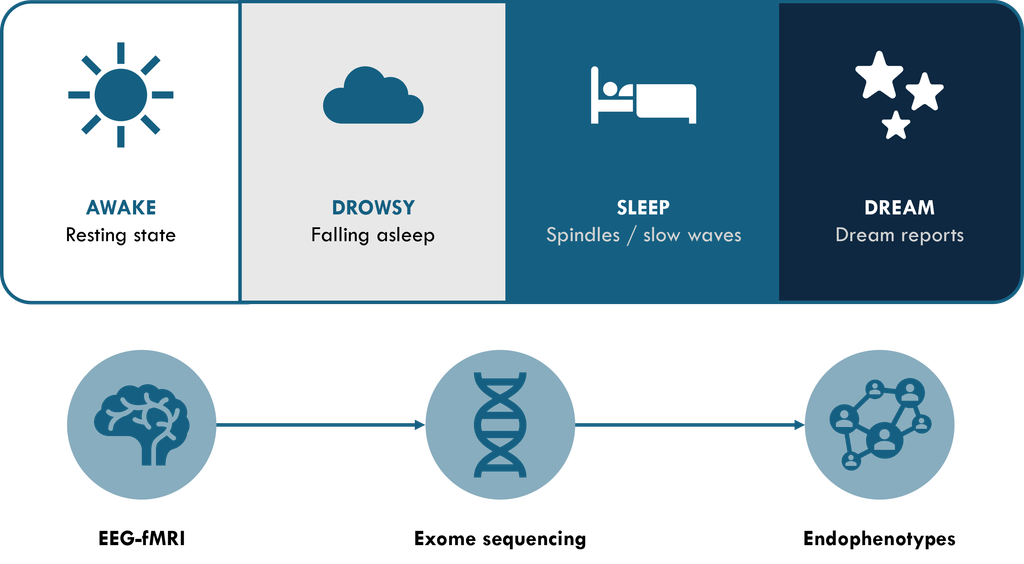
REFINE combines simultaneous EEG-fMRI, recorded during both wakefulness and sleep, with whole-exome sequencing in a prospective cohort of adolescents and young adults with well-characterised GGE, compared with healthy controls. Sleep matters here. The generalized spike-wave discharges typical of GGE share thalamo-cortical circuits with sleep spindles and slow waves, so the way the brain moves between vigilance states may reveal disease-specific signatures. Participants are invited to fall asleep inside the scanner. This allows us to follow the transition from wakefulness to sleep and to collect dream reports, offering an additional window on how the epileptic brain generates conscious experience during sleep.
Aim: define imaging-based endophenotypes that distinguish patients from controls, stratify them into clinically meaningful subgroups (including response to anti-seizure medication), and guide the discovery of new genotype–phenotype associations.
- Funded by the Italian Ministry of University and Research (MUR), PRIN 2022
- Duration: 2024–2026
- Principal Investigator: Anna Elisabetta Vaudano
- Partners:
- AOU Modena, University of Modena and Reggio Emilia;
- Child Neuropsychiatry Unit, AOUI Verona (Gaetano Cantalupo);
- Child Neuropsychiatry Unit, IRCCS Giannina Gaslini, Genoa (Elisa De Grandis); Neurogenetics Laboratory, IRCCS Istituto delle Scienze Neurologiche di Bologna (Valerio Carelli)